The 2026 Migration Guide: Finding Late-Season Value
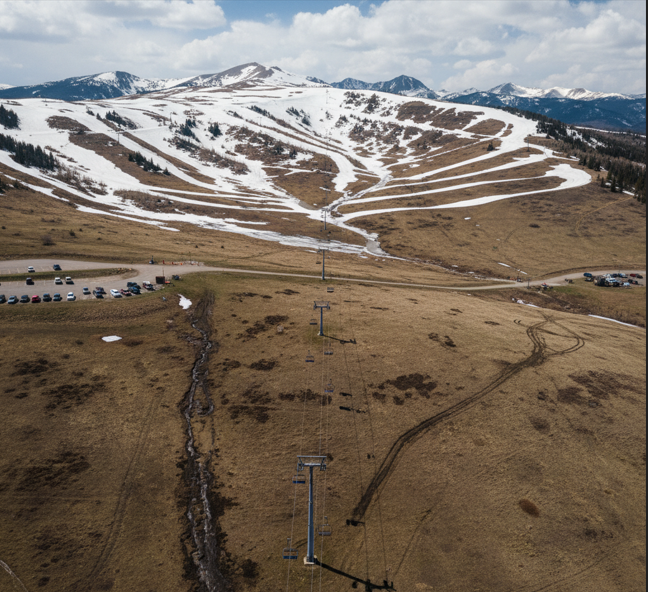
It happens every April. You look at your local hill and see "white ribbons of death" surrounded by mud and mountain bikers. The "Climate Anxiety" of the 2026 season has hit the low-altitude resorts hard, with many Southern Colorado and New England mountains throwing in the towel weeks early.
But for those willing to migrate North or climb higher, the season is just entering its prime. The "Migration Guide" is about efficiency: finding where the snowpack is still measured in feet, not inches, and ensuring your 4-hour drive doesn't end in a gravel pit.
The Promise: By the end of this guide, you’ll have a ranked list of high-altitude sanctuaries and a foolproof strategy to verify snow conditions before you ever leave your driveway.
1. The Breakdown: Comparing the Big Three
For late April 2026, three names dominate the conversation. Each offers a different version of the "Endless Winter."
Arapahoe Basin, CO ("The Legend")
-
Status: While 2026 has been a "low tide" year for Colorado, A-Basin’s base at 10,780 feet remains the most reliable sanctuary in the Rockies.
-
The Draw: The East Wall and Pali Cornice are the focus now. Expect "technical slush"—steep, soft, and bumping up by noon.
-
The Caveat: Coverage is thinner than usual this year; stay on the marked runs to avoid the "Shark Fins" (exposed rocks).
Sunshine Village, Banff, AB ("The High Arctic")
-
Status: The clear winner of 2026. While the US suffered from a "Heat Dome," the Canadian Rockies stayed cold.
-
The Draw: 100% of the terrain is open. You are skiing at nearly 9,000 feet in dry, continental air. This is the only place in North America where you might still find dry powder in late April.
-
The Caveat: It is cold. Don't pack your t-shirt just yet; Banff in April still requires mid-winter layers.
Whistler Blackcomb, BC ("The Giant")
-
Status: Whistler Mountain closed on April 19, 2026, but Blackcomb Mountain remains open until May 18.
-
The Draw: The glacier terrain. 7th Heaven and the Blackcomb Glacier offer massive vertical even when the valley is green.
-
The Caveat: The "atmospheric river" risks. You might get hero snow on the peak and rain at the mid-station.
2. The "Mud Season" Strategy: Master the Snow Stake
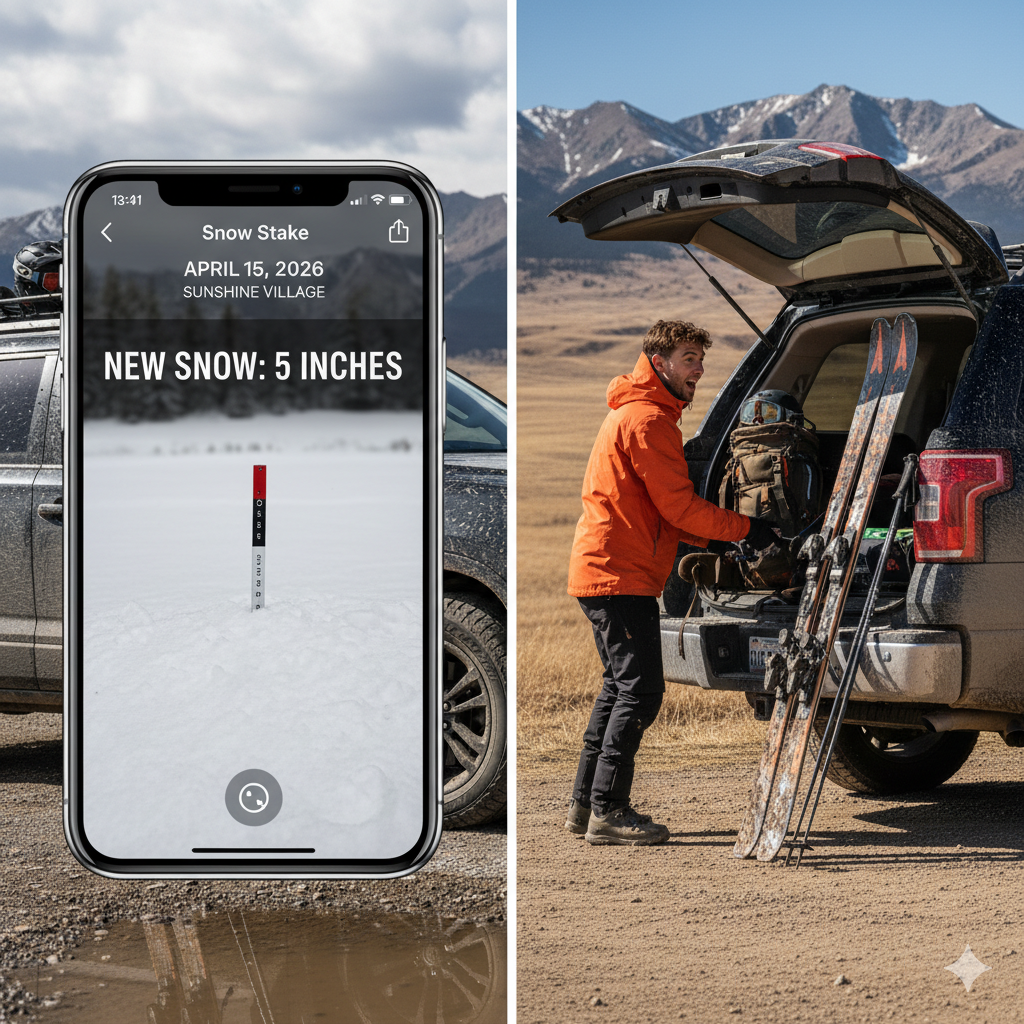
Nothing ruins a weekend like driving hours to a "mud pit." To avoid this, you must look past the "Official Snow Report" (which is often marketing-heavy) and go straight to the Snow Stake Webcam.
-
The 24-Hour Stake: Check this at 7:00 AM. If the stake shows a "crusty" texture rather than fresh flakes, it means a heavy freeze happened. This is great for morning groomers but wait for the sun to hit the bowls.
-
The "Base" Cam: Look at the bottom of the main lift. If you see brown patches around the lift towers, the resort is in "survival mode."
-
Timelapse Analysis: Most resorts (like Breckenridge or Whistler) offer a 24-hour timelapse. Watch the snow melt during the day—if it disappears entirely by 3:00 PM, the snow is "rotten" to the ground.
3. Logistics: Are "Spring Passes" Worth It?
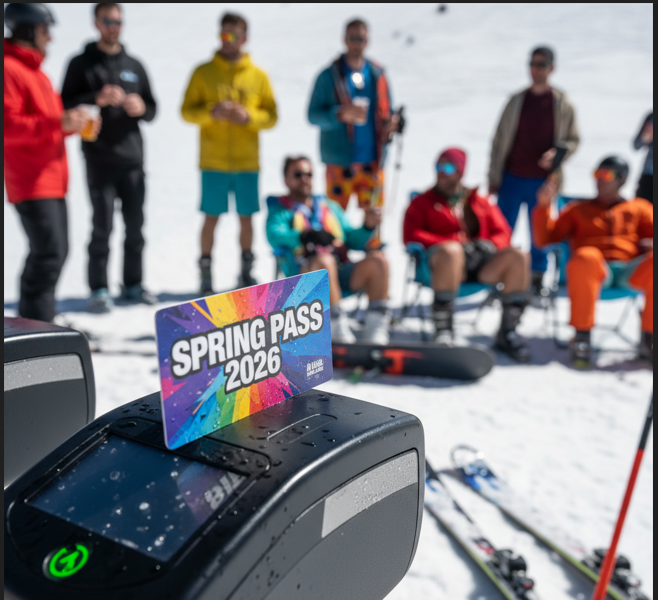
Resorts are desperate to keep traffic high in April, leading to the rise of the Spring Pass (e.g., the $299 "April-to-Close" deals).
-
The Math: If a day ticket is $220 and a Spring Pass is $299, the "break-even" is two days. * The Secret Benefit: Many Spring Passes for 2026 also include "Uphill Access" for free. If the lifts close early due to wind or melt, you can still skin up for sunset turns.
-
The Risk: Most Spring Passes are non-refundable. If a "Heat Dome" hits on April 20th and the resort closes early, you lose. Check the resort's "Historical Closing Date" before buying.
Conclusion: Chase the Altitude
The 2026 season isn't dead; it’s just moving uphill. Follow the snowpack data, verify with the cams, and grab a Spring Pass if you plan on skiing more than a weekend.
Are you planning a "Migration" trip this month? Are you heading North to Banff or climbing the Continental Divide at A-Basin? Share your travel plans (and webcam secrets) in the comments!
Ready to Hit the Slopes?
Visit Arizona Snowbowl for an unforgettable skiing experience
[Affiliate Link Placeholder - Book Your Trip]