The "Spring Survival" Technical Guide: How to Outrun the Slush
It’s 1:30 PM in mid-April 2026. You’ve just finished a glorious morning of corn snow, but as the temperature climbs, the mountain starts to fight back. You head into a flat cat-track, expecting to glide, but instead, your skis feel like they’ve been grabbed by invisible hands. You lurch forward, your tips dive, and you’re nearly bucked over the bars.
Welcome to the "Spring Suction"—the phenomenon where high water content in the snow creates a vacuum seal against your ski base. Without the right prep and technique, "Spring Shredding" quickly turns into "Spring Slogging."
The Promise: This technical guide will transform your April experience. You’ll learn how to tune your gear to break surface tension, how to adjust your body position for "Mascarpone" snow, and how to survive the intense high-altitude radiation of 2026.
1. Gear Prep: The Battle Against Surface Tension
In the winter, snow is dry and abrasive. In the spring, snow is wet and hydraulic. To stay fast, you need to change how your ski interacts with water.
The Magic of Warm-Temp Wax
If you are still riding on "Universal" or "Cold" wax, you are essentially skiing on sandpaper.
-
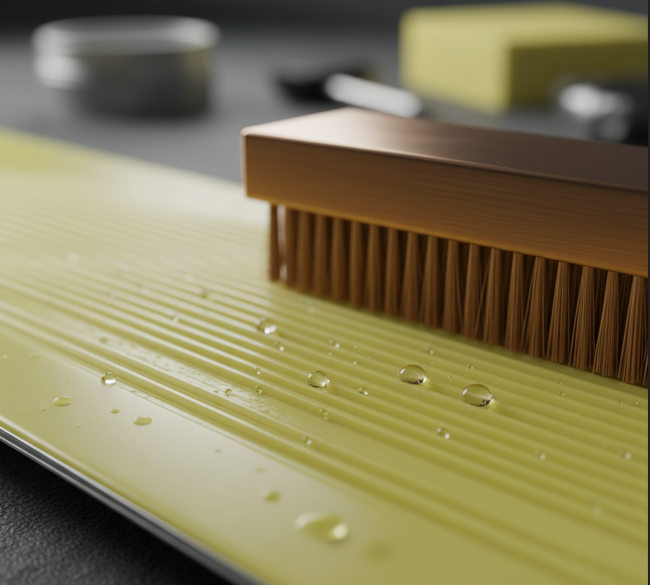
Yellow is Your Friend: For 2026, we recommend a high-quality Yellow (Warm) hydrocarbon wax. These waxes are softer and contain hydrophobic additives specifically designed to repel bulk water.
-
The "Dirty Snow" Factor: Spring snow is full of pollen, pine needles, and lift grease. Harder winter waxes actually attract this grime, creating a "braking" effect. A fresh coat of warm wax acts as a shield against both water and dirt.
Base Structure: Adding "Tread" to Your Skis
Think of your ski base like a car tire. A slick tire hydroplanes on wet roads; a treaded tire channels water away.
-
Structure Patterns: Use a structuring tool or a stiff bronze brush to create linear or cross-hatch patterns in your wax. These microscopic grooves allow air to enter between the ski and the snow, breaking the vacuum seal (suction) and letting you glide.
2. Technique: Navigating "Mascarpone" Snow
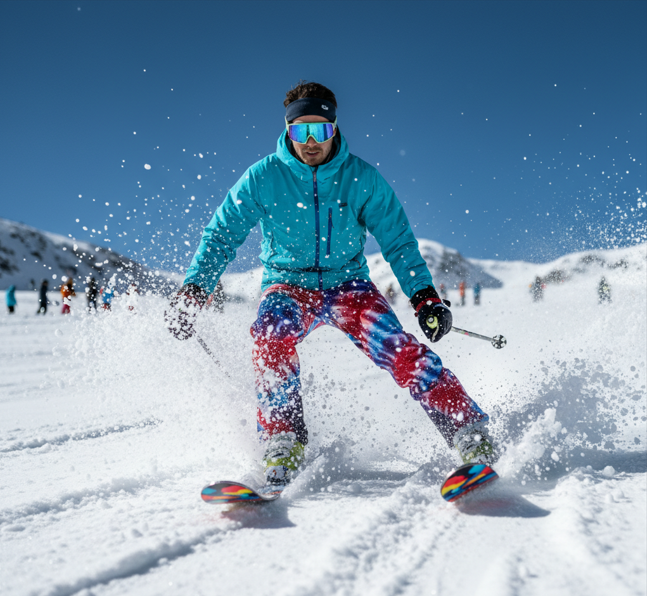
When the snow reaches the consistency of heavy Italian cream—what we call "Mascarpone"—traditional carving technique becomes a liability.
Shifting the Weight
In the spring, the "sweet spot" on your skis moves.
-
Centered, Not Forward: If you drive your shins too hard into the front of your boots (as you would in January), your tips will submerge into the heavy slush. This is how most spring ACL injuries occur.
-
The "Neutral" Drive: Keep your weight centered over the middle of the ski. Think about "pulling" your toes up slightly to keep the tips buoyant. You want to "surf" the top 2 inches of the slush rather than cutting through it.
The Wide-Track Stance
Heavy snow is unstable. Widening your stance by just 2–3 inches provides a more stable platform to handle the unpredictable "grabs" and "voids" in the melting snowpack.
3. Sun Safety: Beyond the Goggle Tan
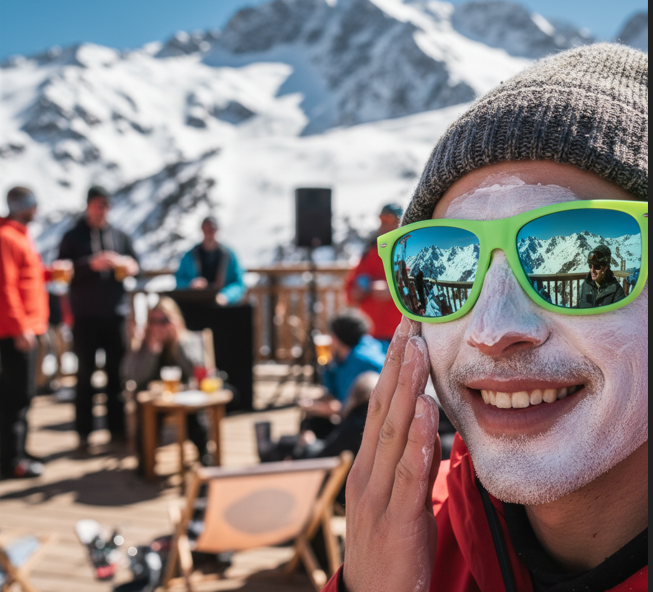
In 2026, high-altitude UV radiation is at an all-time high. The snow acts as a giant parabolic mirror, reflecting 80% of UV rays back up at your face—specifically the spots you usually miss, like the underside of your nose and chin.
-
The "Goggle Tan" Trap: While a goggle tan is a badge of honor, a "Goggle Burn" is a week of peeling skin and misery. Use a mineral-based (Zinc or Titanium) SPF 50+ sunscreen. Chemical sunscreens often break down under the intense heat and sweat of a spring afternoon.
-
Hydration is Technical: Slush skiing is physically exhausting—it’s like running through sand. You are losing electrolytes at twice the rate of a winter day. If you feel your technique slipping or your legs shaking, you are likely dehydrated. Stop at the mid-mountain lodge for water and salts before the fatigue leads to a mistake.
4. Quick-Fix: The "Pocket Wax" Strategy
Always carry a small tin of rub-on paste wax or a liquid spray in your pocket. As the day warms up and you hit different aspects (shady north vs. sunny south), your glide will change. A 30-second application at the top of the lift can be the difference between a fun run and a long walk across a flat section.
Conclusion: Master the Melt
Spring skiing isn't a "lesser" version of winter; it’s a different sport entirely. By mastering the science of warm-weather tuning and adjusting your stance for heavy snow, you’ll be the one gliding effortlessly while everyone else is stuck in the glue.
What’s your "Spring Survival" secret? Do you have a favorite wax brand for the 2026 season, or a tip for avoiding the dreaded slush-buckle? Let us know in the comments—we're giving away a "Spring Tuning Kit" to the most helpful tip!
Ready to Hit the Slopes?
Visit Arizona Snowbowl for an unforgettable skiing experience
[Affiliate Link Placeholder - Book Your Trip]